StepSecurity has secured $20 million in Series A funding to expand its software supply-chain security capabilities, helping organisations protect developer environments, code repositories and automated software delivery pipelines from malicious attacks.
Announced on 18 November 2026, the oversubscribed funding round was led by Elephant, with participation from existing investors Runtime Ventures, Inner Loop Capital and SaaS Ventures.
Combined with its previous $3 million seed investment, the latest funding brings StepSecurity’s total capital raised to $23 million.
The company will use the investment to accelerate product development, expand its security research capabilities and strengthen protection across increasingly complex software development environments.
Strengthening software supply-chain security
Founded in 2021, StepSecurity develops cybersecurity technologies designed to protect the environments where software is created, tested and delivered.
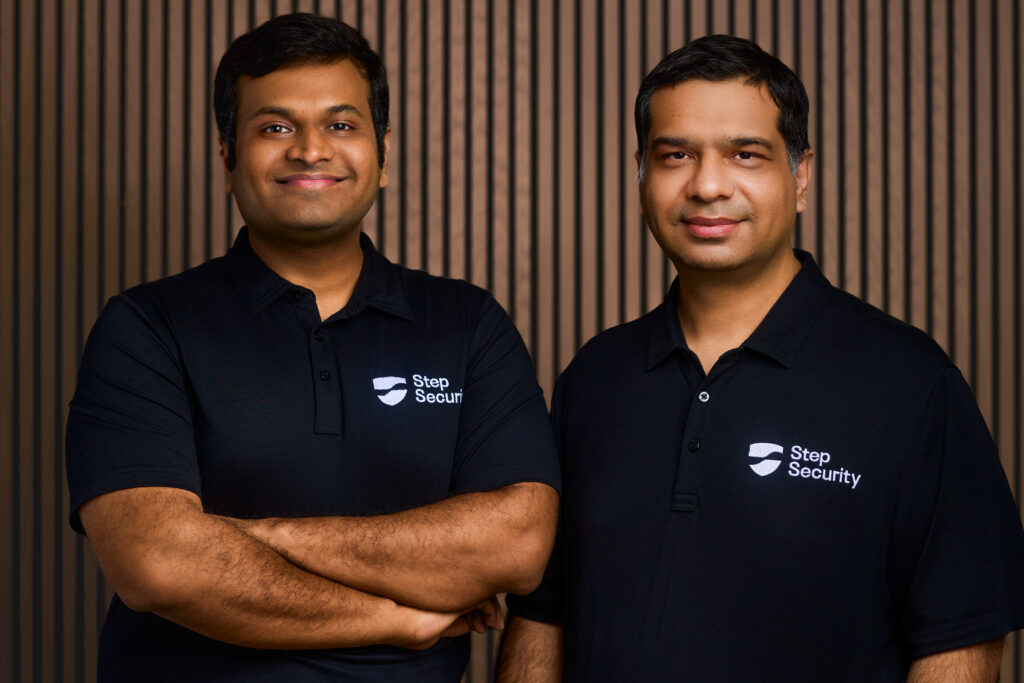
The company was established by Varun Sharma and Ashish Kurmi following their experiences responding to major software supply-chain incidents, including the SolarWinds and Codecov attacks.
These incidents demonstrated how malicious code introduced through trusted software components could compromise sensitive information before applications reached production.
StepSecurity’s approach focuses on identifying and blocking malicious activity throughout the development process, rather than relying exclusively on security controls within production systems.
Its platform combines developer-machine protection, repository checks, package security and continuous integration and delivery (CI/CD) monitoring.
Protecting developer machines and automated pipelines
A central component of StepSecurity’s technology is Harden-Runner, which monitors activity within software build environments.
The tool examines running processes, network connections and file changes, helping security teams identify unexpected behaviour during automated builds.
It also enables organisations to restrict outbound network connections, reducing opportunities for malicious software dependencies to transfer sensitive information outside trusted environments.
More than 20,000 open-source projects currently use the free community version of Harden-Runner.
StepSecurity has also developed Dev Machine Guard, which extends protection to developers’ workstations.
This provides additional visibility into malicious software packages and potentially compromised development tools operating outside conventional build pipelines.
Introducing free Secure Registry protection
Alongside the funding announcement, StepSecurity has launched a free community tier of Secure Registry, integrated with Harden-Runner.
The service allows eligible public repositories to access software packages through a controlled registry, applying policies designed to identify and block compromised dependencies.
Secure Registry can also delay the adoption of newly published software package versions, providing time for potential malicious behaviour to be identified before installation.
The new community offering expands StepSecurity’s existing approach to protecting open-source development environments.
The company says combining controls across developer machines, code repositories, package downloads and CI/CD pipelines provides multiple opportunities to detect or prevent software supply-chain attacks.
Expanding protection for AI-assisted development
StepSecurity is also responding to changes in the way organisations develop software through artificial intelligence.
AI coding assistants and autonomous agents can increasingly download software packages, execute code and interact with development environments.
While these tools can support productivity, they also introduce additional environments in which malicious components could execute.
StepSecurity plans to extend its existing protection capabilities into AI agent sandboxes, allowing organisations to apply security controls to software executed by automated systems.
The funding will support further engineering work, including product development and the expansion of its security research team.
The company also intends to increase its sales and marketing capabilities as demand for software supply-chain protection develops.
Supporting enterprise cybersecurity requirements
StepSecurity reports significant commercial growth since its seed funding round in 2024.
According to the company, annual recurring revenue increased fivefold in 2024 and again in 2025, with further growth exceeding that level during 2026.
Its enterprise customers include Circle, Dexcom, Kong, Mercari, Chainguard and XBOW.
Varun Sharma, Co-Founder and Chief Executive Officer of StepSecurity, said the company’s next phase of growth will build on its experience securing development environments and supporting open-source software projects.
The latest investment will allow StepSecurity to expand its protection capabilities as businesses increasingly depend on interconnected development tools, open-source packages and automated software systems.
The announcement reflects growing investment in cybersecurity technologies designed to address threats across the entire software development lifecycle.
IMAGE CREDIT: StepSecurity